A new job offer, a teaching credential, a real estate license, a visa application overseas. All of them can start with the same instruction: get fingerprinted. What that instruction rarely says is which kind. At Notary Newport Beach, it is common for people to arrive with the wrong form, or with no form at all. The short version is this: California agencies almost always want LiveScan, while out-of-state agencies and the FBI usually want an ink card. Here is how to tell which one is yours before you make the trip.
What Is the Difference Between LiveScan and an Ink Fingerprint Card?
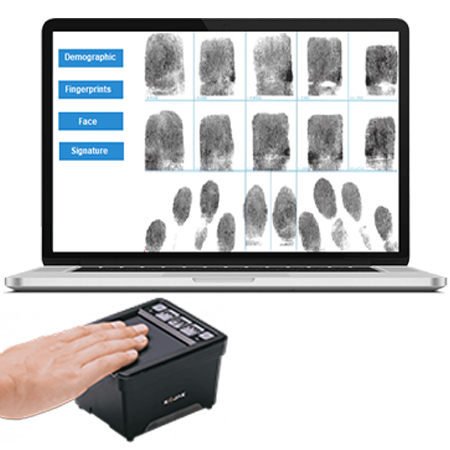
LiveScan captures your prints digitally and sends them electronically to the California Department of Justice (DOJ), and to the FBI if your agency requests it. An ink card is a paper form, almost always the FBI’s standard FD-258, with your prints rolled onto it so you can mail it yourself.
With LiveScan, nothing leaves the building in your hands except a receipt copy of your form. With an ink card, you walk out holding the card, and getting it to the right place is up to you.
Which One Does a California Job or License Require?
If the agency asking for your prints is in California, plan on LiveScan. California Penal Code § 11077.1 requires applicant fingerprints to be submitted to the DOJ electronically, so ink cards are the exception. Common examples include:
- Teachers, substitutes and school volunteers
- Nurses, caregivers and other healthcare license applicants
- Real estate, insurance and contractor licensees
- Notaries public, process servers and security guards
- Employees of agencies that serve children, seniors or patients
The DOJ does allow a limited exemption. An applicant who lives outside California and cannot reach a LiveScan site can submit an FD-258 card with the DOJ’s Request for Exemption from Mandatory Electronic Fingerprint Submission form. That request comes from the applicant, not the employer, and the DOJ makes the call.
When Do You Need an Ink Card Instead?
You need an ink card when the agency is outside California or is a federal office that asks for an FD-258. Common examples:
- A license or credential in another state whose board mails you its own card
- An FBI Identity History Summary, the federal record often requested for work visas, residency abroad or international adoption
- Some federal programs and immigration filings
California LiveScan results go to California agencies. A Texas nursing board or a consulate in Madrid cannot receive them, which is why out-of-state and overseas applicants nearly always end up with a card. If the agency sent you a card with its own preprinted codes, use that card rather than a blank one.
What Should You Bring to a Notary Newport Beach Fingerprinting Appointment?
Bring a valid government photo ID and the paperwork from the agency that requested your prints. For LiveScan, that paperwork is the Request for Live Scan Service form, BCIA 8016, filled out by the agency or with its information.
The form carries the details that route your results: the ORI, a code the DOJ assigns to each requesting agency; the authorized applicant type; your job title or license type; and the level of service, which tells the system whether to run a DOJ check, an FBI check or both. If any of those are missing or wrong, your prints may go to the wrong place or nowhere at all. Ask the agency for a completed form before your appointment instead of guessing at codes.
For an ink card, bring the FD-258 the agency gave you if it sent one, along with any instructions about where it gets mailed.
How Much Does Fingerprinting Cost?
You pay two separate charges: a rolling fee to the location that takes your prints and a government processing fee. The government fee depends on the agency and the level of service. As one example, the California Department of Insurance lists a $32 DOJ processing fee and a $17 FBI fee for its applicants. Some employers pay the government fees directly, so check your form before paying.
How Long Do Results Take?
Many LiveScan results come back within days, though records that need review take longer, and the DOJ sends them to the agency, not to you. If you want to check the status yourself, keep the 10-digit Automated Transaction Identifier (ATI number) printed on your copy of the BCIA 8016. You can enter it with your date of birth on the DOJ’s applicant status page.
Ink cards take longer because they travel by mail, then wait in the receiving agency’s queue. Build in extra time if a licensing deadline is close.
What Causes a Rejection or a Second Appointment?
The DOJ points to three common causes of delay: poor fingerprint quality, a criminal history record that needs manual review, and incorrect information on the electronic submission. The first one you can help with. Avoid heavy lotion on the day of your appointment, and let the operator know about cuts, calluses or very dry skin. People who work with their hands, such as contractors, nurses and hairstylists, sometimes have worn ridges that take extra passes to capture.
If a submission is rejected for print quality, the agency will usually ask you to roll again. Keep your original ATI number, since a resubmission often references it.
Getting It Right the First Time
The rule of thumb holds for most people: a California agency means LiveScan, and an out-of-state board, the FBI or a foreign government usually means an FD-258 ink card. Before you book anything, confirm which one the agency wants and get its form in hand. Then bring that form and your photo ID to Notary Newport Beach on San Miguel Drive, and we will help make sure your prints go where they need to go the first time.